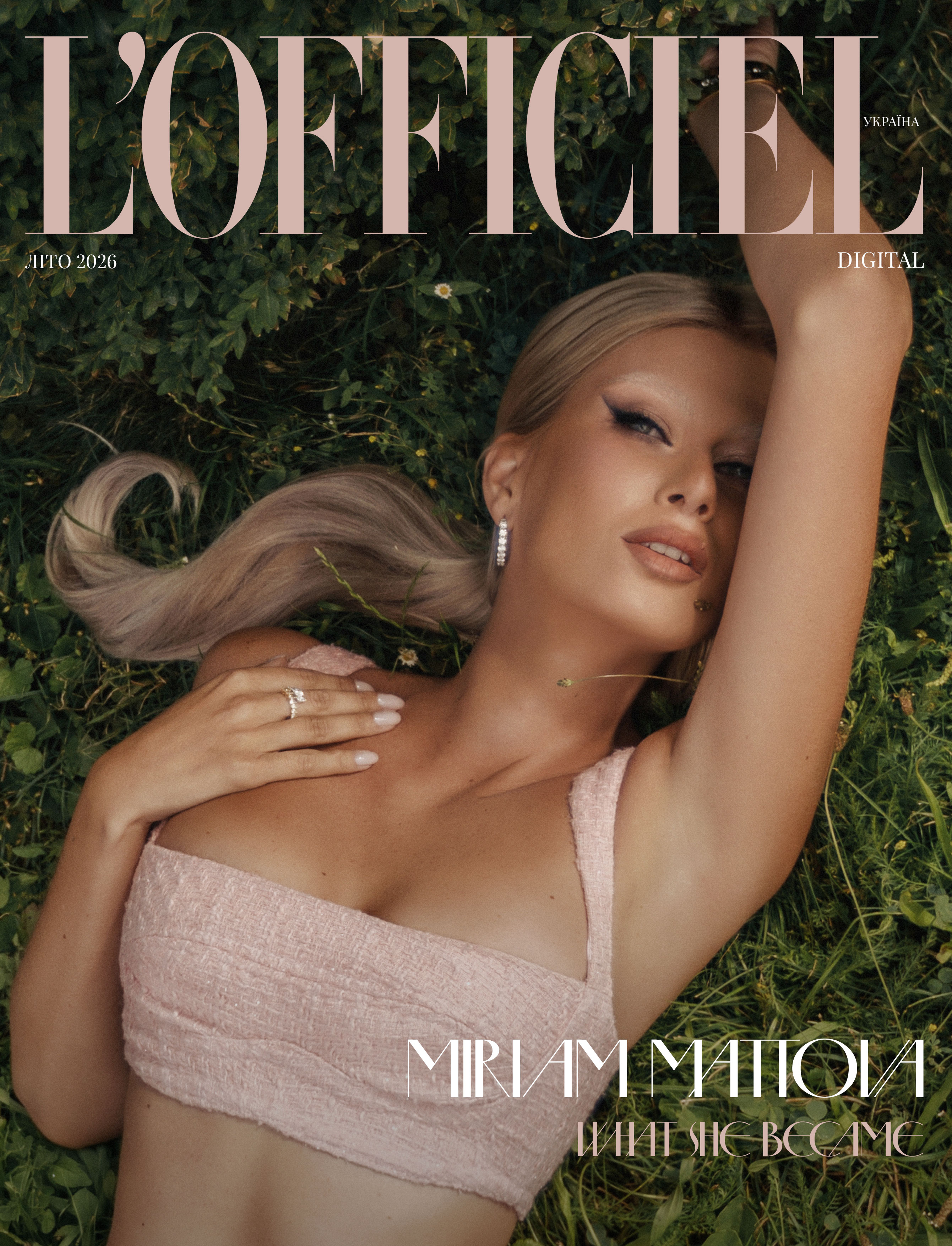
«Fashion gave me a platform, but eventually I had to decide what I wanted to say with it». For Miriam, that decision has meant refusing to separate the different parts of herself: the model who loves beauty and femininity, the Jewish woman who is proud of her heritage, the advocate who believes silence has consequences, and the woman who hopes to build a family grounded in strong values. In this conversation, she reflects on what we inherit, what we choose, what we stand for and what we ultimately leave behind.
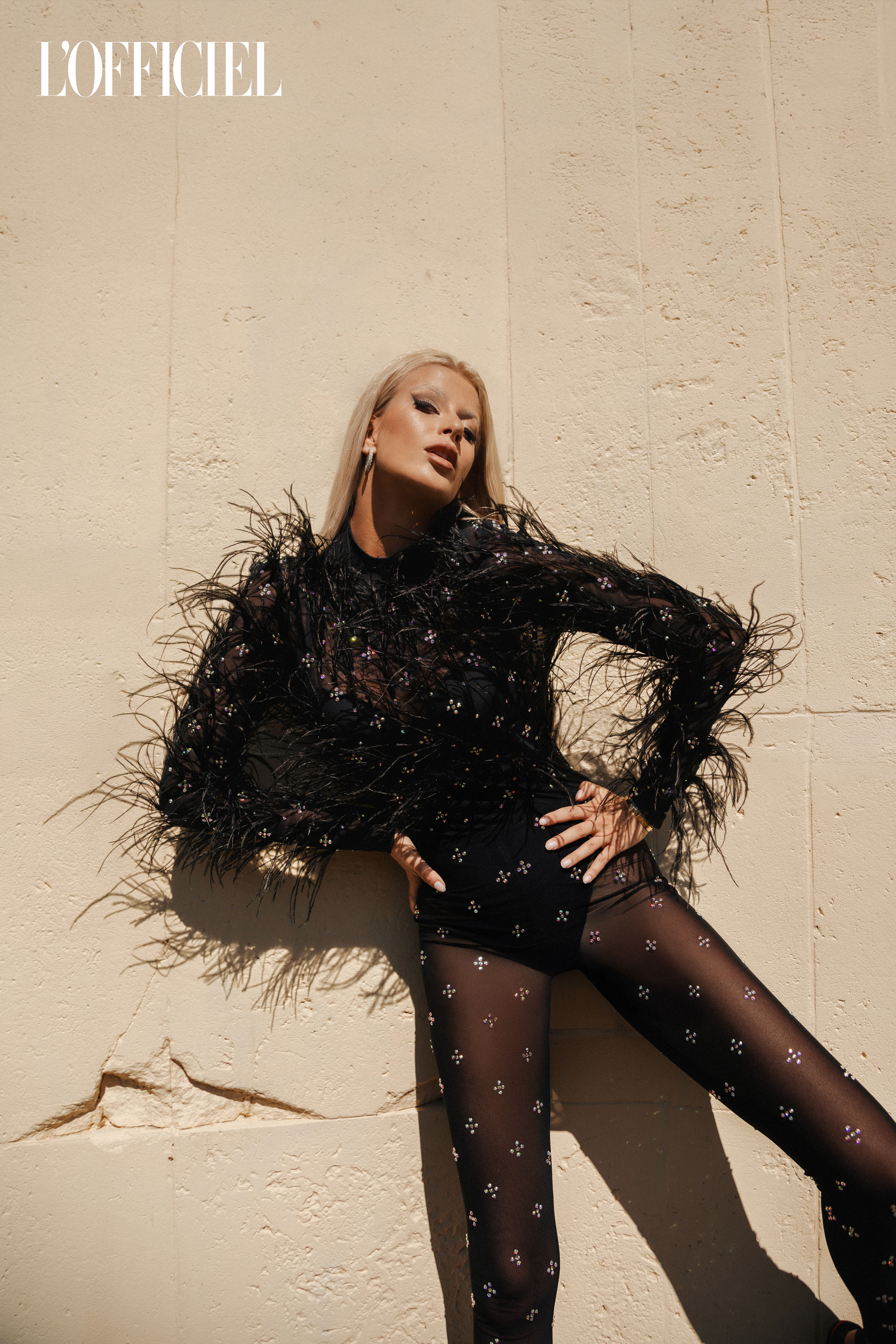
Jumpsuit: Jana Pistejova, Jewelry: Cartier, Graff
Has your definition of beauty changed as you have changed?
My definition of beauty has changed completely as I have changed. When I first entered the fashion industry, beauty was something very external: the way a face photographed, the way a body moved in clothing, the discipline of maintaining an image, and the ability to become whatever a photographer, designer or editor needed you to be. I learned very early how to be looked at. What took me much longer to learn was how to look at myself. There is a strange contradiction in building a career around being seen while still trying to understand who you actually are when the camera is gone. For a long time, I thought becoming more beautiful and becoming more successful were somehow connected to becoming more certain about myself. They weren't. If anything, the older I became, the more I realized that I could have the career, the photographs, the recognition and all the external validation, and still be asking myself a much more fundamental question: Who am I when I am not performing an image for someone else? Finding that answer became much more important to me than perfecting the image. I began to understand that becoming more fully yourself is not about adding something to your appearance; it is about removing everything that was never really yours. That became particularly profound for me when I began looking at my Jewish identity differently. I am the granddaughter of a Holocaust survivor, so Jewish identity was always part of my story, but there is a difference between inheriting an identity and consciously understanding what it means to you. I had to ask myself what I had been given by the generations before me, what I wanted to carry forward, and what kind of Jewish woman I wanted to be in my own generation. In fashion, I had spent years learning how to transform myself visually; in discovering my identity, I was doing almost the opposite. I was stripping away the layers and coming back to something that was already there. So today, I don't think beauty is about becoming more perfect. I think it is about becoming more honest. The most beautiful version of a woman, to me, is the one who knows who she is and no longer needs to make herself smaller, quieter or more acceptable to be welcomed into a room. Fashion taught me how powerful an image can be; finding my identity taught me that a woman has to have something behind the image. The face may open the door, but it is the values, history, convictions and courage you carry with you that determine what you do once you walk through it.
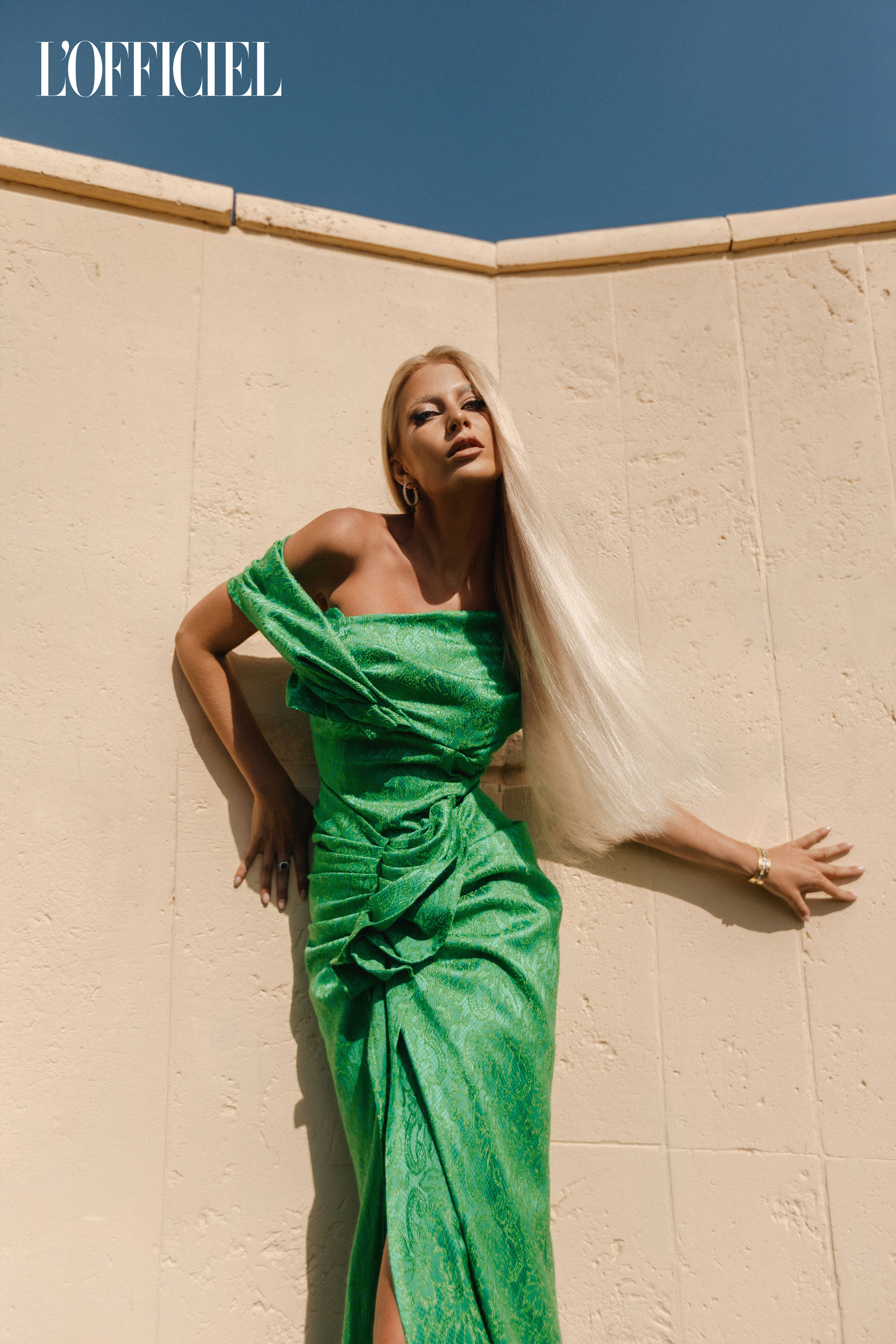
Dress: Zuzana Hakova, Jewelry: Cartier, Graff
Was there ever a moment when you realized that being beautiful might actually be the least interesting thing about you?
I don't think I ever realized that being beautiful was the least interesting thing about me, because I don't believe beauty and substance have to compete with each other. Beauty matters to me. Feeling good in your body, taking care of yourself, dressing beautifully and presenting yourself with confidence can change the way you move through the world. There is something powerful about a woman who feels good about herself, because that feeling doesn't stay on the surface, it comes through in the way she carries herself, speaks, works and treats other people. I don't think we should be taught to dismiss beauty in order to prove that we are intelligent or serious. We can be both. That is also something I find deeply compatible with my Jewish identity. There is a Jewish principle of shmirat haguf the responsibility to care for your body, that Rabbi Meir Dubrawsky taught me. Our bodies are not something we simply own and can neglect. They are entrusted to us by Hashem, and that creates a responsibility to look after them. For me, that can mean many things: how you nourish yourself, how you care for your physical health, how you present yourself, how you protect your mind and what you allow into your life. Judaism doesn't ask us to reject the physical world. It asks us to give it meaning and to understand that how we treat ourselves is part of how we live our values. At the same time, I have learned that taking care of your appearance is only one part of taking care of yourself. There has to be an inside as well as an outside. You can put on the most beautiful dress in the world, but if you don't know who you are, eventually that insecurity will show. And the opposite is also true, when you genuinely respect yourself, when you know your values and feel connected to who you are, it changes the way you look. Confidence is not something a makeup artist can create for you. There is a kind of beauty that comes from being at peace with yourself, and I think people recognize it immediately. That has become especially important to me as I have found my identity more consciously, as a Jewish woman, as my grandmother's granddaughter, as a model, and now as someone who uses her platform to speak about things I believe matter. The question isn't whether beauty is important or whether character is important. The question is whether we are paying attention to both, because the way we feel inside eventually becomes part of the way we are seen outside.
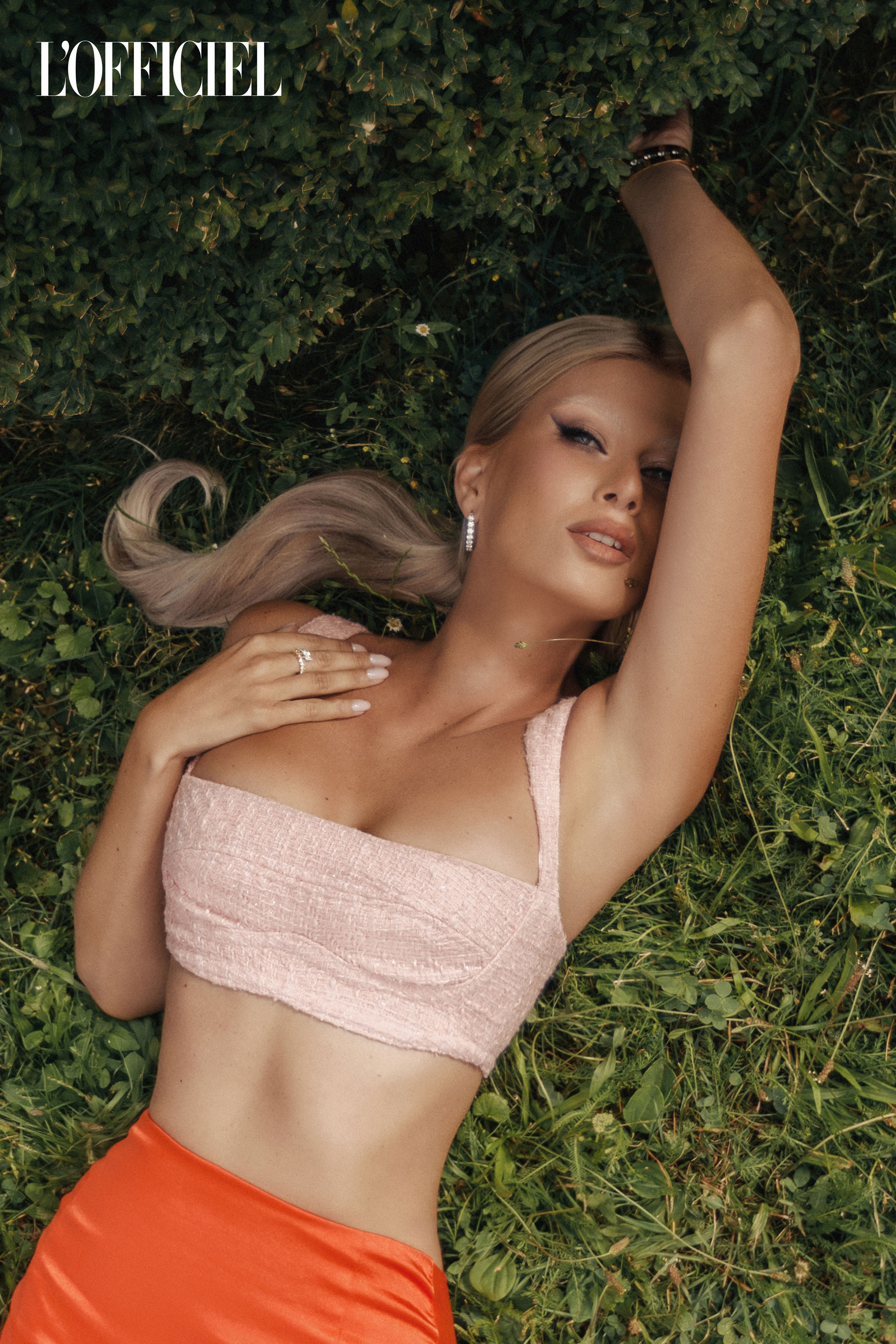
In fashion, you are constantly given an image to step into. How much of the woman you become is shaped by what you are given, and how much comes from what you choose for yourself?
I think about this question differently because fashion has made me very aware of the difference between something being given to you and something becoming yours. A designer can put an extraordinary dress on my body, but until I decide how I want to wear it, it is still someone else's creation. I think identity works in a similar way. I was given a family, a history, a Jewish identity, certain values and a particular understanding of femininity, but as I grew older, I began to understand what each of those things had actually given me. My Jewish identity taught me that knowing where you come from gives you strength in knowing where you are going. My family taught me that femininity and strength are not opposites, I can care deeply about beauty, fashion and how I present myself while also being uncompromising about what I believe. And my grandmother's story taught me that survival is not the end of the story; what you build after surviving is part of your responsibility. That is also why the Torah's emphasis on passing things from one generation to the next feels so personal to me. We are commanded to teach our children and to keep these things alive, and I see that not simply as remembering history but as continuing something that existed before us. My grandmother survived Terezín, and because she survived, I am here. But I don't want that to be the end of the connection. I want to take what she was able to preserve, our identity, our family, our traditions and the strength to continue, and give it another life in my own generation. In fashion, I learned that a piece can be passed from one person to another and still look completely different depending on who wears it. I think heritage can work the same way: you don't have to change its essence to make it your own. For me, that became especially important as I became more public about being Jewish and about Israel. There was a point when I had to decide whether my Jewish identity was simply something beautiful that belonged to my personal history, or something I was willing to stand behind when it became uncomfortable. I chose the latter. I didn't want to treat my identity like an accessory that I could put on when it suited the moment and take off when it became difficult. If it was truly part of me, then it had to exist in the difficult moments too. That is where I think the woman I am today differs from the girl who first entered fashion, I am much more conscious of what I carry and why I carry it. So when I look at myself now, I don't see a choice between what was given to me and what I built myself. I see the two constantly shaping each other. Fashion gave me discipline, confidence and a platform; my family gave me values; my Jewish heritage gave me a sense of history and responsibility; and my own experiences forced me to decide what I would do with all of it. The clothes may change from one shoot to the next, but the woman wearing them has to know what she stands for. That, to me, is what we become: not a rejection of what we were given, but a conscious decision about what is worth carrying forward.
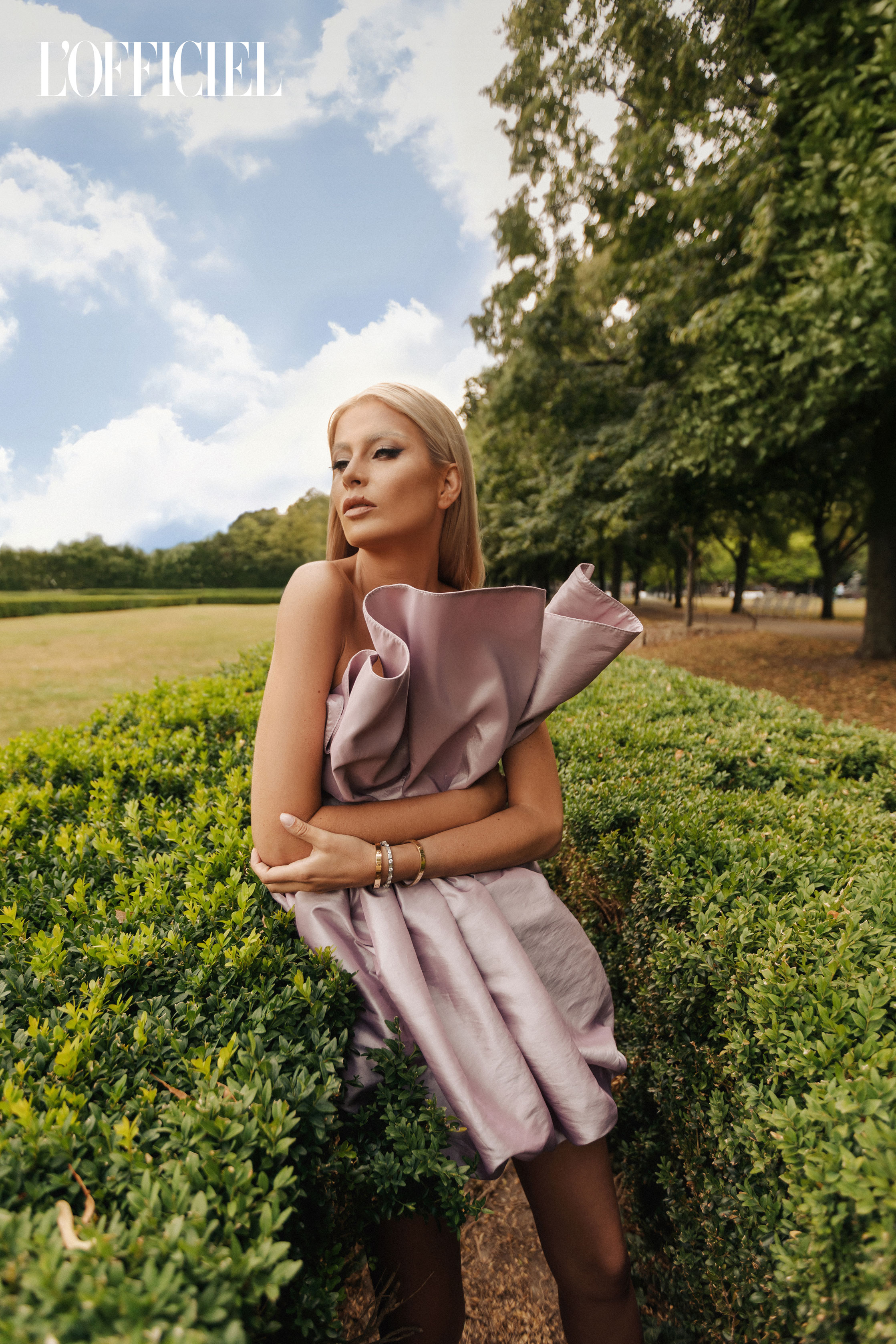
Dress: Petra Kovacs, Jewelry: Cartier, Graff
Fashion has given you one kind of life and one kind of visibility. What kind of woman are you still becoming beyond the camera, as an advocate, a philanthropist, and the woman who hopes to become a mother one day?
I think I am still becoming a woman who is less interested in fitting into one definition of herself. Fashion has been a very important part of my life, and I love it, I love the creativity, the femininity, the discipline, the transformation that happens through clothing and photography. But I have never believed that being a model means that fashion has to be the only thing I am allowed to care about. If anything, fashion taught me that a woman can step into many different roles without losing herself. One day I can be on set wearing a couture gown, and the next I can be speaking about antisemitism and Israels right to defend itself, supporting trauma care in Israel, or standing in a room advocating for something I believe in. Those things don't contradict each other. They are all parts of me. There is sometimes an assumption, that if a woman comes from fashion, she should stay in the safe territory of beauty and entertainment, as though caring about serious issues somehow makes her less feminine or less appropriate for the industry. I don't see it that way at all. I actually think there is something powerful about bringing beauty into spaces where people don't expect to find it, and bringing conviction into an industry that is sometimes dismissed as superficial. My platform was built through fashion, but I don't want the purpose of that platform to end with fashion. If people are willing to listen because they first discovered me through a photograph or a magazine, then I feel a responsibility to use that attention for something that matters. Philanthropy has become an important part of that for me because it turns belief into something tangible. It is one thing to speak about people who are suffering; it is another to ask what you can actually do for them. Working with organizations supporting people affected by trauma in Israel has made that distinction very real to me. It has also changed the way I think about influence. I don't want to simply have followers or attention. I want to be able to take the visibility I have been given and turn some of it into support, awareness and action. That is a very different kind of success than the one I understood when I first entered modeling. And when I think about the woman I am still becoming, I think increasingly about the kind of mother I hope to be one day and the kind of family I want to build. I want to be a woman who can teach her children that femininity is not weakness, that beauty and intelligence can exist together, that Jewish identity is something to be proud of, and that having convictions does not mean you have to stop being compassionate. I want them to inherit not only my history, but a sense of responsibility toward other people. Maybe that is the biggest shift for me: when I was younger, I was very focused on becoming someone. Now I am much more interested in becoming someone who can build something that lasts beyond me.
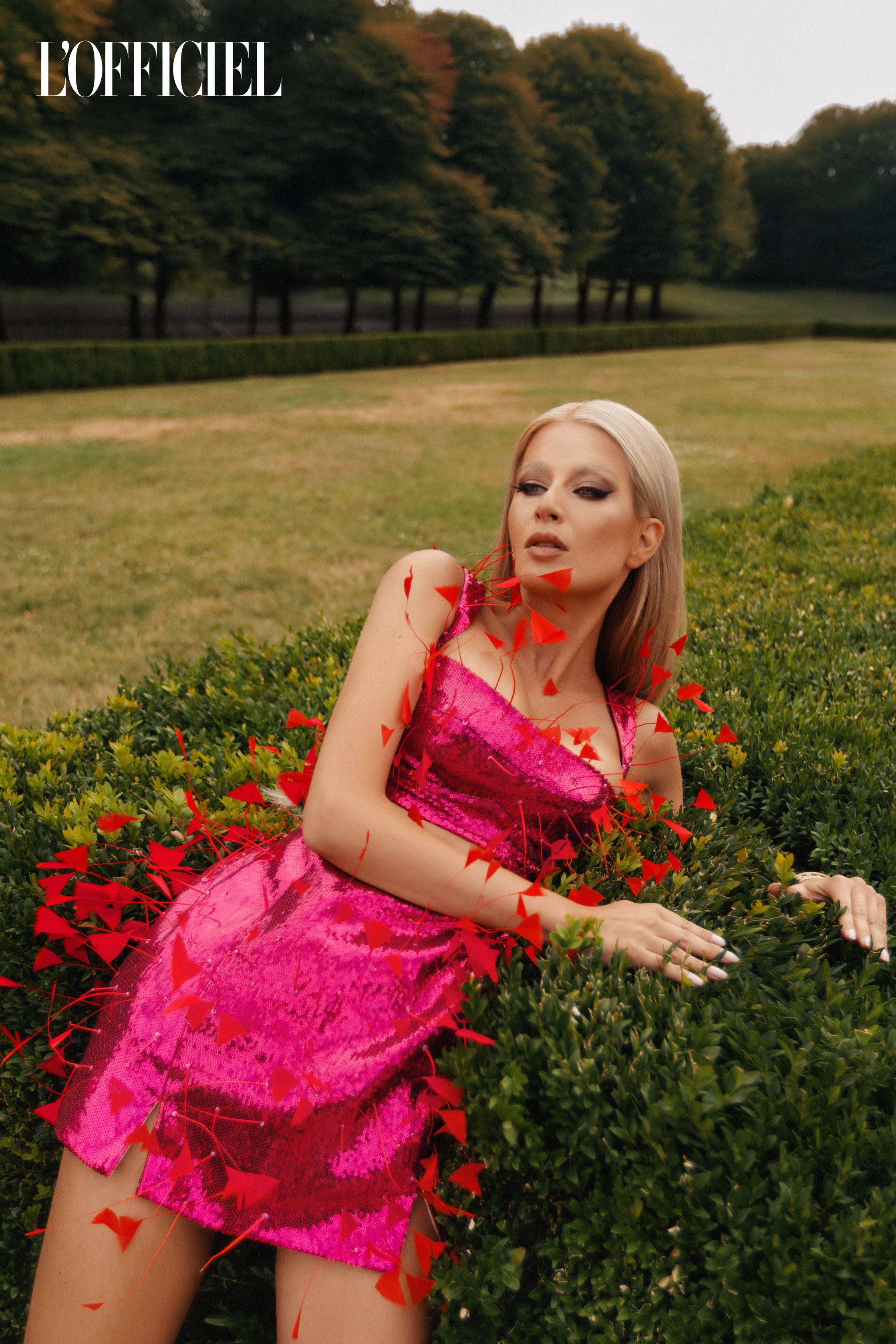
Top and Skirt: Petra Kovacs
You have spent your career working with clothes, images and beauty, things that are constantly changing. What are the things you want to pass down that will never go out of style?
I love that question because fashion has taught me that trends are temporary, but there are certain things that never lose their value. A beautiful dress can belong to one season and then disappear, but confidence, dignity, kindness, identity and knowing who you are don't become outdated. The Torah says, “You shall teach them diligently to your children,” and I think that is one of the most beautiful ideas in Judaism, that what matters most is not simply what we possess, but what we are intentional about passing to the next generation. We are responsible for making sure something meaningful continues. For me, that begins with identity. I want my future children to know exactly who they are, where they come from and why that matters. I want them to know their Jewish history and to understand the generations that came before them, including my grandmother and everything that had to happen for our family to exist today. But I don't want them to inherit only the weight of that history. I want them to inherit the strength that came out of it. I want them to grow up understanding that being Jewish is not something to hide when it becomes uncomfortable; it is something to know, live and be proud of. I also want to pass down the things I have learned as a woman. I want my daughter, if I am blessed with one, to know that she never has to choose between being feminine and being strong, or between caring about how she looks and having depth. I want her to understand that taking care of herself is not vanity, that beauty can be joyful, and that the way she presents herself can be an expression of confidence rather than a measure of her worth. Those things don't compete with one another; they can make each other stronger. Maybe that is what I have learned most from fashion: you can inherit something beautiful, but eventually you have to decide how you will wear it. My grandmother gave me a history. My family gave me values. Judaism gave me a framework for understanding responsibility and continuity. Fashion gave me a platform and taught me the power of presentation. But what I do with all of those things is my choice. If I can pass that understanding to the next generation, that they don't have to choose between beauty and substance, tradition and individuality, then I think I will have passed down something far more valuable than anything that could ever hang in a wardrobe.